If you're looking for the quick answer, here it is: the best online guitar lessons for beginners aren't just a random collection of videos. They're built on a clear, step-by-step curriculum with top-notch video quality and the practice tools you actually need. The goal is to build a real musical foundation from day one, not just learn a few licks.
Welcome to what might be the most exciting first step you'll ever take. We're in an amazing time where learning guitar from your own home is not only possible but incredibly effective. This guide is your roadmap to cutting through the noise and finding a program that actually clicks with you.

We’ll show you what separates a great online learning platform from a glorified YouTube playlist. Think of it like this: you can have a gym full of fancy equipment, but without a personal trainer and a solid plan, you're just wandering around. A structured approach is everything.
The world of online guitar lessons has absolutely exploded, and for good reason. The market hit USD 936.15 million in 2021 and is on track to hit USD 2,229.7 million by 2033. That's not just a trend; it's a massive shift showing that beginners crave the flexibility to learn at their own pace, without being locked into a rigid schedule.
This boom isn't just about convenience, though. It's about having access to tools that traditional lessons simply can't offer.
A truly effective online guitar lesson isn't just a video—it's an interactive environment. It combines world-class instruction with technology that lets you control the pace, loop tricky parts, and even practice with a virtual band.
So, what should you actually be looking for? The best platforms have a few non-negotiable features that work together to create a learning experience that keeps you motivated and making real, noticeable progress. You should feel like you have a guide right there with you every step of the way. If you want to dig deeper, check out our guide on how to find the right guitar teacher for you.
When you're comparing options, make sure they have these essentials:
To give you a clearer picture, I've put together a quick comparison table of the must-have features.
| Feature | Why It's Critical for Beginners | What to Look For |
|---|---|---|
| Structured Curriculum | Prevents overwhelm and ensures you're building a solid foundation, not just learning random songs. | Look for terms like "Learning Paths," "Beginner Core Courses," or a clear, numbered sequence of lessons. |
| Expert Instructors | A great teacher explains the "why" behind the "what," making concepts stick and keeping you inspired. | Check instructor bios. Are they experienced educators or just skilled performers? Watch some sample lessons. |
| High-Quality Video | You need to see exactly what the instructor's hands are doing, from multiple angles. | Multi-angle views (fretting and picking hands), clear HD video, and good lighting are non-negotiable. |
| Interactive Tools | These tools are your virtual practice room, letting you slow down, loop, and dissect lessons. | Essential tools include slow-motion, A/B looping, and synchronized tablature/notation that follows the video. |
| Broad Song Library | Learning actual songs is what keeps it fun. A good library lets you apply new skills immediately. | Look for a mix of genres and difficulty levels, with accurate tabs and backing tracks to play along with. |
Ultimately, picking the right platform is the single most important decision you'll make when you start. It lays the groundwork for everything that comes after, so it's worth taking the time to find the right fit.
When you're first starting out, it's easy to assume one online guitar lesson is just like the next. But the gap between a truly high-quality program and a random jumble of YouTube videos is absolutely massive. The best platforms are built on three core pillars that work together to create an experience that actually gets you playing.
These aren't just nice-to-haves; they're the non-negotiables. They're what ensures you're actively building real skills, not just passively watching someone else play. Let's break down what separates the good from the great.
If there's one thing that makes or breaks your success, it's this: a structured learning path. It is without a doubt the most critical part of the best online guitar lessons for beginners.
Think about it like trying to build a house. You wouldn't start with the roof before you've even laid the foundation, right? Of course not. Learning guitar works the exact same way—you have to build from the ground up.
A proper learning path is a guided, step-by-step curriculum designed to teach you the fundamentals in a logical order. You start with the absolute basics, like how to hold the guitar and pick correctly. Then you move on to your first few chords, learn to switch between them smoothly, and only then tackle basic strumming patterns.
This progressive system is designed to prevent the overwhelm that makes so many new players quit. It takes the guesswork out of the equation, so you're always confident you're working on the right thing at the right time.
A great learning path is like having a personal mentor guiding you. It anticipates your questions, reinforces core concepts, and builds your skills layer by layer, turning complex techniques into manageable steps.
Without that structure, you’re just lost at sea. You might jump from a lesson on advanced blues solos to a video on fingerpicking without having any of the essential skills locked down. That kind of scattered approach just creates gaps in your playing and leads to a whole lot of frustration.
Here’s a common myth: any amazing guitarist can be an amazing teacher. While it’s true that you want an instructor who can play, what really matters for a beginner is their ability to communicate complex ideas with clarity and empathy. A great instructor doesn't just show you what to play; they explain the why behind it.
Think of it like this: a world-class chef might be a terrible person to teach you how to boil an egg. They operate on such a high level of instinct and knowledge that they can’t easily break things down for a total novice. A great teacher, on the other hand, excels at it.
When you're checking out an online course, look for instructors who:
The best platforms have a deep roster of educators who aren't just masters of their craft, but who are genuinely passionate about teaching. This is how you learn proper technique from day one and avoid developing bad habits that can be a nightmare to unlearn later.
Finally, the technical quality of the lessons themselves plays a huge role in your progress. High production value isn't just about looking slick—it’s about giving you the crystal-clear visual and audio information you need to learn effectively. Fuzzy video or muffled audio makes it impossible to see or hear the details that matter.
For a beginner-focused course, a few key production elements are non-negotiable. This includes multi-angle camera views, which let you see both the fretting and picking hands up close. This is absolutely crucial for understanding fingerings and strumming techniques.
You also need pristine, clear audio so you can hear every note distinctly, which helps train your ear. On top of that, synchronized tablature (tabs) that highlights the notes on-screen as they're being played creates a powerful connection between what you see, hear, and do. These aren't just bonus features; they are fundamental tools that will dramatically speed up your learning curve.
When a platform invests in getting these details right, it shows they truly understand what a beginner needs to succeed. To see this kind of quality for yourself, check out a TrueFire All Access Trial.
The secret ingredient that truly separates the best online guitar lessons from a simple video library is modern technology. These aren't just flashy extras; they're powerful practice tools that turn passive viewing into active, hands-on learning.
When used right, they become your personal assistants, helping you conquer tricky parts much faster than you could on your own.
Think about learning a new chord change. With a regular video, you’d be constantly hitting rewind, trying to catch what the instructor's fingers are doing. But with the right tech, you can zero in on that single moment, slow it down to half-speed, and loop it until it clicks. That kind of focused repetition is how you build precise muscle memory.
Modern learning platforms build specific features right into the lesson player to help you dissect and master new material. This is a massive advantage over the old way of doing things, where you might only get to see a teacher play something once or twice.
Here are the key tools to look for:
These tools work together to create an incredibly efficient practice space. Instead of getting frustrated by a fast passage, you can just slow it down, loop it, and gradually speed it up as you get comfortable.
One of the biggest breakthroughs in online guitar education is synchronized, interactive tablature. Tablature, or "tab," is a simple way to write out music for guitar. When this tab is synced directly to the lesson video, it creates an undeniable link between what you see, what you hear, and what your hands should be doing.
As the instructor plays, the notes on the tab light up in real-time. This visual feedback is huge for beginners. It takes the guesswork out of learning and helps you connect the notes on the fretboard to the sounds you're hearing. Some platforms even include tools for fretboard recognition and ear training to push your skills further.
Finally, the most fun and musically useful tool is a solid library of high-quality jam tracks. These are backing tracks—usually with bass, drums, and other instruments—that let you practice in a real musical context.
Playing along with a backing track is the single most effective way for a beginner to develop a solid sense of rhythm and timing. It forces you to listen, lock into a groove, and feel how your part fits within a full band.
Instead of just running scales or strumming chords in a quiet room, you get to apply what you're learning to actual music. This isn't just more fun; it's how you learn to become a real musician. Platforms like TrueFire build these tools right in, giving you thousands of tracks to play over.
It's the ultimate key to staying motivated because it turns practice from a chore into a jam session.
To see how these tools can totally change your practice routine, you can explore them firsthand with a TrueFire All Access Trial.
Let's be honest. The biggest hurdle for any new guitarist isn't learning a chord; it's just sticking with it. That initial wave of excitement can crash pretty hard against the reality of sore fingertips and clumsy chord changes. This is why having a clear, simple roadmap is your best friend—it keeps you going and lets you actually see and feel yourself getting better.
So, let's map out a realistic plan for your first three months. The goal isn't to become a rock god overnight. It's about building a habit that lasts. We'll stick to a simple but surprisingly effective schedule: just 30 minutes, five days a week. This gives you plenty of time to build momentum without burning out, plus it gives your hands and brain the downtime they need to recover and absorb everything.
Your first 30 days are all about the fundamentals. Don't try to speed through this stuff. Getting the basics right now will save you a world of headaches later. Think of it like pouring the concrete for your musical house—you want it to be absolutely solid.
Your weekly practice sessions should revolve around:
Okay, with the basics starting to feel less alien, month two is where the magic really begins. This is all about getting those chords to flow together and turning them into something that sounds like actual music. Your muscle memory will start to kick in, and chord changes that felt like finger-twisters will begin to feel more natural.
During this phase, you'll want to:
This timeline shows how good practice tools can help you nail each stage, whether it's slowing down a tricky part or jamming along with a full band.
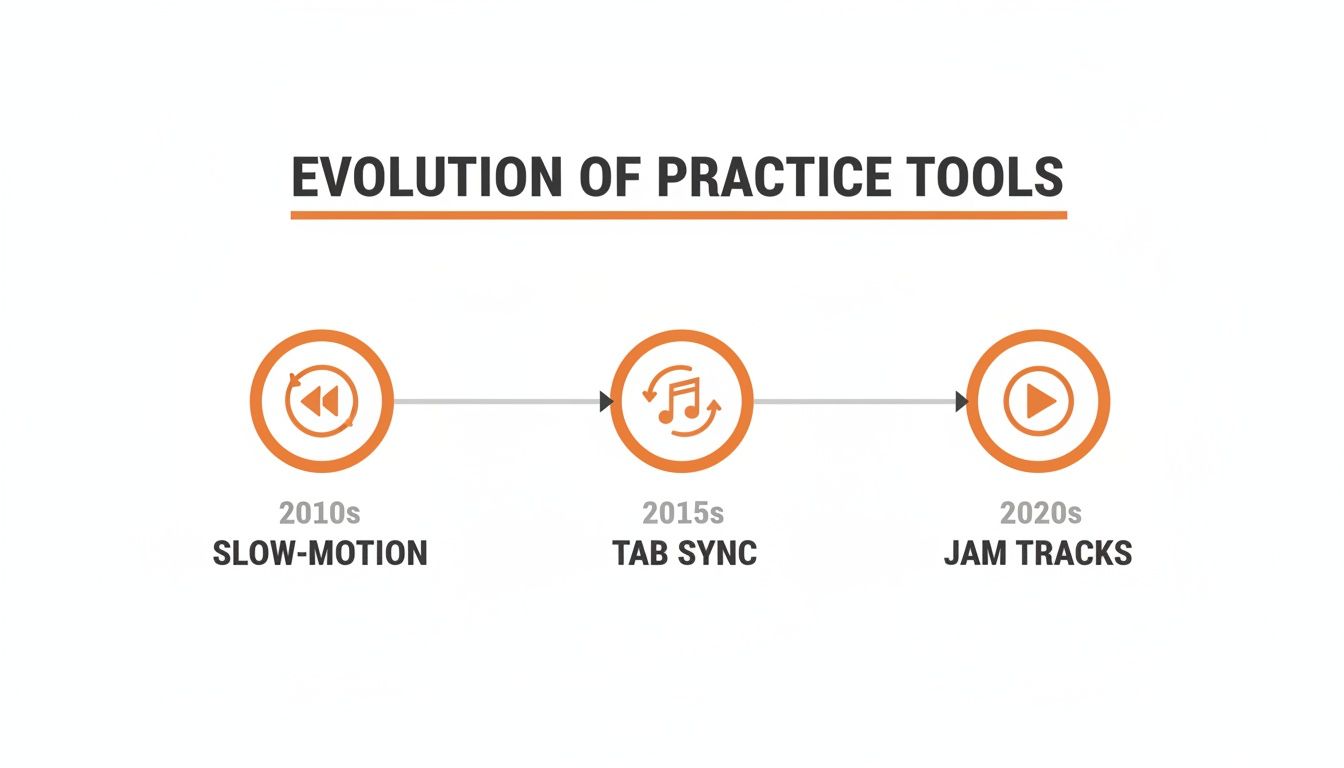
This evolution makes it clear that modern tech isn't just a gimmick; it’s a fundamental part of an efficient practice routine.
By the end of month three, you're going to feel like a real guitarist. Now it's time to start exploring the fretboard beyond just the first few frets. This phase is about adding new textures to your playing and setting yourself up for more advanced techniques later on. If you want to go deeper, check out our guide on 5 smart practice tips for guitar players.
Your focus this month should include:
The secret to a successful 90-day plan isn't about cramming your brain with information. It’s about focused, consistent repetition of the basics until they become completely automatic.
This kind of structured progress is exactly what makes established platforms so effective. TrueFire, founded way back in 1999, has guided millions of players through this very process. With a library of over 55,000 lessons organized into clear Learning Paths, it provides a time-tested framework that removes the guesswork.
By following a clear plan and using the right tools, you can build incredible momentum. To experience this guided approach firsthand, you can start a TrueFire All Access Trial.
Every single one of us hits the same roadblocks when we're starting out. Knowing what these hurdles are ahead of time is like having a map through a tricky forest—it helps you sidestep the exact things that cause so many new players to hang up their guitars for good.
The path to actually playing guitar is littered with common frustrations. But if you see them coming, you can keep your motivation high and your fingers on the fretboard.
One of the biggest pitfalls for new players is just plain information overload. You’ve got millions of free videos at your fingertips, making it way too easy to jump from a lesson on blues licks to a tutorial on fingerstyle without getting good at any of the fundamentals. This scattershot approach feels productive, but trust me, it’s a recipe for disaster.
Think of it like trying to learn a language by memorizing random words from the dictionary. You might know a lot of words, but you can't string together a single coherent sentence. A structured learning path is the grammar you desperately need, giving you a clear plan that keeps you from getting lost in the noise.
Another critical mistake is blowing off proper technique from day one. It's so tempting to think, "I'll just get the notes right for now and fix my hand position later." This is a dangerous mindset. Bad habits, like a tense picking hand or sloppy posture, get baked into your muscle memory incredibly fast.
And those habits are a nightmare to unlearn later on.
Developing good technique is like building a strong athletic stance. It feels awkward at first, but it gives you the balance, power, and efficiency for every advanced move you’ll want to make down the road.
Starting with correct form means you won't hit a frustrating plateau later, held back by physical limitations you accidentally created for yourself. This is exactly why high-quality video with multi-angle views is a non-negotiable feature.
Finally, so many beginners get tripped up by unrealistic expectations. Learning guitar is a marathon, not a sprint. You won't sound like your favorite guitar hero in a week, and that's completely normal. The real secret is to celebrate the small victories along the way.
Getting a clean sound out of a G chord for the first time? That's a huge win. Switching smoothly between two chords without stopping? A massive milestone. Recognizing these small steps is vital for staying fired up. If you find yourself getting frustrated, just remember the old saying: don't let perfection kill your progress.
It’s no surprise that beginners flock to online lessons for their accessibility, with self-paced platforms becoming the go-to choice. North America actually accounts for 42.6% of all online music learning revenue, a boom driven by smart devices that let you rewind lessons as many times as you need—a key feature for working through these early hurdles at your own speed.
A quality online platform gives you the structure to navigate these challenges, offering a clear path that prevents the frustration that makes so many people quit. To see what this guided approach feels like, you can explore a TrueFire All Access Trial.
So, we've covered the essential ingredients for a great online learning experience. Now, let's see how a top-tier platform actually brings all those pieces together. An effective system isn't just a random pile of features; it's a fully integrated environment built to take you from fumbling with your first chord to playing with real confidence.
The absolute cornerstone of this approach is a structured curriculum. At TrueFire, we call these Learning Paths, and they're pretty much the DNA of our whole teaching philosophy. Think of them not as random playlists, but as carefully sequenced courses that build your skills logically, one on top of the other.
This step-by-step method makes sure you nail the fundamentals before you even think about moving on. It completely removes the guesswork that derails so many aspiring players.
Of course, a curriculum is only as good as the person teaching it. TrueFire's instructors are more than just phenomenal players; these are world-class educators and GRAMMY-winning artists who have a rare gift for breaking things down. They know how to take a complex technique and make it feel simple and achievable.
Having that level of instruction is crucial. You're not just learning what to play, but how to play it with the right technique and musicality from your very first lesson. This kind of expert guidance helps you build good habits that stick with you for your entire musical life, saving you from the massive frustration of having to unlearn bad habits down the road.
This is where the right technology can completely change the game for you. The best online guitar lessons for beginners are interactive, not just passive videos you watch. Our platform is built around a whole suite of powerful practice tools designed to keep you locked in and engaged with every single lesson.
Imagine you're trying to nail a tricky chord change. With TrueFire's tools, you can:
This creates an incredibly powerful feedback loop that just speeds up your progress. And when you're ready to apply your new skills, you can jump into our library of over 20,000 jam tracks. Honestly, playing along with a full band is the most effective (and fun) way to develop your rhythm and timing. You can even check out a full breakdown of how to integrate TrueFire into your guitar learning journey.
TrueFire is designed to be a complete ecosystem for your development. From mastering your first chords to playing along with full-band contexts, every tool and lesson is engineered to support your growth from day one to becoming the guitarist you want to be.
This blend of a structured path, expert teachers, and immersive tools is what turns practice from a chore into something you genuinely look forward to. To see exactly how this approach can transform your playing and build your confidence, we invite you to start a TrueFire All Access Trial.
Jumping into the world of online guitar lessons always kicks up a few questions. Totally normal. Let's tackle some of the most common ones beginners have so you can get started with total confidence.
This is a big one. The simple answer? Consistency beats cramming, every single time.
Your goal as a new player isn't to run a marathon that leaves you burnt out and frustrated. It's about building a solid habit and developing muscle memory. Aim for 20-30 minutes of focused practice at least five days a week. Seriously, that's it. That kind of schedule is way more effective than trying to jam a few hours of practice into a Saturday afternoon. A good online platform will give you the perfect roadmap to make every one of those minutes count, mixing the necessary exercises with actual music so it never feels like a chore.
Absolutely. Not only can you learn, but in many ways, the best online lessons today offer things a private teacher just can't. Think about it.
With multi-angle HD video, you can zoom in and see a player's hands and picking technique with more clarity than if you were sitting right next to them. Interactive tools like slow-motion playback and looping let you drill a tricky part over and over again without ever feeling like you're holding someone up. Millions of players have learned this way because a well-designed curriculum just plain works.
If I had to pick just one thing, it's having a structured, progressive learning path. Hands down.
Imagine being handed a giant library of books and told, "Okay, learn everything." Overwhelming, right? That's what a huge, unorganized collection of lessons feels like. A proper learning path is your guide. It takes you by the hand from the very basics—how to hold the pick, how to make your first note ring out clearly—and walks you step-by-step through chords, strumming patterns, and essential theory. This is the secret to building a solid foundation without hitting those frustrating walls where you feel like you've missed something important. It's the biggest key to sticking with it and actually having fun.
As someone who's spent years teaching music, I can tell you that a clear path is what separates the players who succeed from those who quit. The right platform gives you that path. If you want to see for yourself how a structured plan and killer practice tools change the game, check out the TrueFire All Access Trial.
